
Preparing Future Leaders
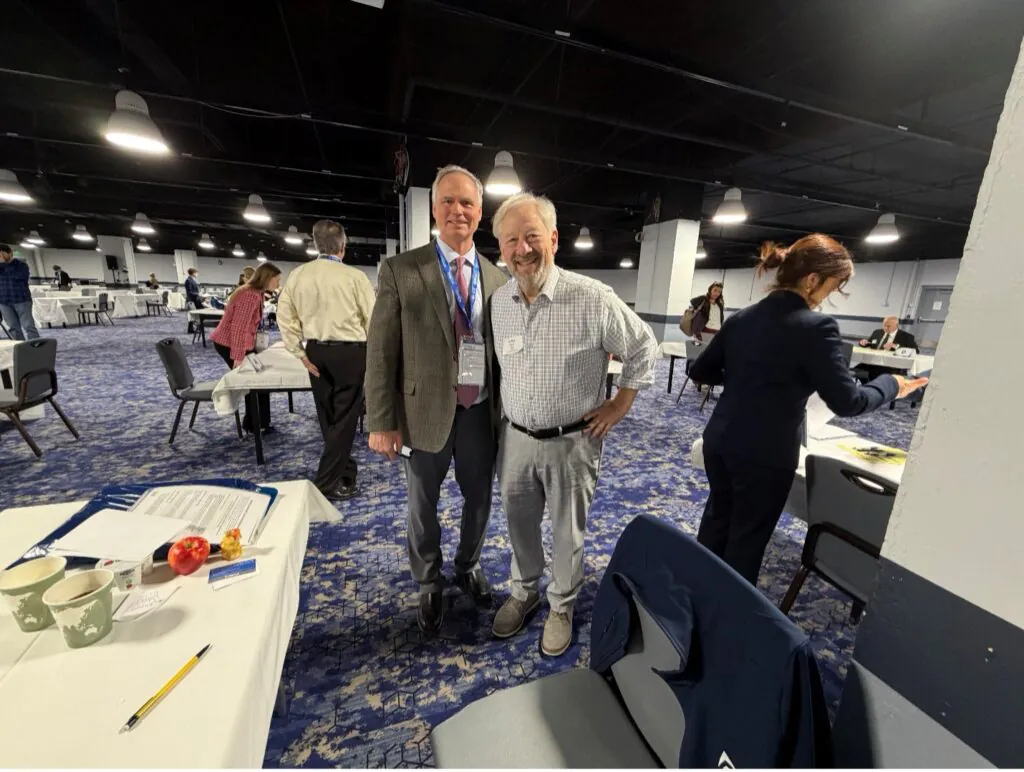
Steve Lear joined Chaska High School teacher Jeff Rydland at the DECA State Career Development Conference on March 1-3, 2026, at the Hyatt Regency in downtown Minneapolis.
 Since 1946, DECA (Distributive Education Clubs of America) has offered students an innovative way to learn business-related skills, and its popularity is growing. Approximately 3,200 students competed at this year’s state event, a significant increase from the 2,800 participants in 2025.
Steve previously judged a DECA district competition for the Mounds View school district, where a student’s sales pitch for the Oral-B electric toothbrush was so persuasive that he bought one! Impressed by DECA’s mission to “prepare emerging leaders and entrepreneurs for careers in marketing, finance, hospitality, and management in high schools and colleges around the globe,” Steve returned to DECA as a judge for the 2026 state competition.
Jeff Rydland has been involved with the DECA program at Chaska High School for 28 years, serving as the chapter’s leader for the past 16 years. “Students get real-time feedback on skills that they will be using going forward with their lives,” he explained. “Any of the functional areas has the students presenting themselves, their ideas—shaking hands, justifying their decisions, talking with others. It’s a great deal of professionalism being practiced in real time with feedback.”1
DECA’s comprehensive learning program is designed to:
- Integrate into Classroom Instruction: Students select an area of interest from 12 functional areas of DECA and begin researching and studying it with teachers and fellow chapter members.
- Apply Learning: DECA members put their knowledge into action through rigorous project-based activities that require creative solutions with practical outcomes.
- Connect to Business: Partnerships with businesses at both local and broader levels provide DECA members with realistic insight into the industry and promote meaningful, relevant learning.
- Promote Competition: Annual district, state, and national competitions drive members to excel and keep working to improve their performance. As an integral part of the classroom curriculum, these industry-validated competitions align with the National Curriculum Standards. 2
Students are evaluated on both a written component (exam or report) and an interactive component (role-plays and case studies, prepared events, and online simulations). The role-play and case study events are conducted on-site at the competitions, with judges present. These events provide students with an opportunity to think on their feet, often allowing only 10 minutes to put together a creative solution to a case study or just 15 minutes to craft a pitch.
Over 70 competitive events were offered this year, and Steve was asked to help judge the products and services in the financial literacy category. For example, three students from Eden Prairie High School built a financial literacy product called Money Wise for neurodivergent students. Following the seminar, these students reached out to Steve, and he is currently interviewing them for a possible internship.
Steve’s DECA experience produced several key takeaways:
The Benefit of Using Peer Teachers
The innovation and professionalism of the DECA participants persuaded Steve that peer teachers might be a solution to address both a lack of student engagement and the shortage of business teachers.
Students are likely to have valuable insights into the best ways to reach their classmates. Steve envisions peer-teacher classrooms where students present material to the class, supported by teacher “coaches” who reinforce (or reframe) students’ concepts as needed. This could help transform learning from a passive listening event into a shared, collaborative experience.
The Joy of Judging Student Competitions
Student competitions are a great way for industry and education to join forces to advance young people’s skills. Steve would like his new venture, the Minnesota Jump$tart Coalition, to create a volunteer group of competition judges and offer training for the role. He cites the primary qualifications as “listening, encouraging, demonstrating curiosity, giving feedback, and helping students make their own decisions.”
Research confirms that students learn best when they can connect classroom learning with real-life experiences. Student competitions promote this by fostering business connections and civic responsibility.
Steve recommends that anyone interested in mentoring young people consider volunteering with five organizations he has personally worked with: BestPrep, Catalyst for Systems Change, DECA, Junior Achievement, and the Minnesota Council on Economic Education (MCEE). All of them produce programs that provide “meaningful experiential learning for our young people” and a rewarding experience for the volunteers who help them build college- and career-ready skills.
Endnotes
- Steve Larson, “Deca – Hands-On Preparation of Future Leaders,” Carver Country Local News, February 7, 2025, https://cclocalnews.org/2025/02/07/deca-hands-on-preparation-of-future-leaders/
- “Innovative Learning to Engage Students,” DECA, Inc., March 27, 2026, https://www.deca.org/mission